
The 10th Judicial District
Johnson County makes up the 10th Judicial District of Kansas. The District Court is the trial court of general jurisdiction, which means it handles nearly every kind of case. The Chief Judge is James Charles Droege, and the court lists more than 20 district judges plus several district magistrate judges. Laura Brewer serves as District Court Administrator and also acts as the court's information officer for media and tour requests.
The court sits in the Johnson County Courthouse at 150 W. Santa Fe Street in Olathe, a seven-story building with 28 courtrooms. The District Attorney, the District Court Trustee, and the Law Library are housed there too. The main court phone is 913-715-3500.
Kansas Trial Court Role
Kansas runs a unified court system. District courts are the trial courts of general original jurisdiction, hearing civil and criminal cases, divorce and domestic relations, probate and estate administration, guardianship, conservatorship, care and treatment, juvenile, and small claims. Above them sit the appellate courts.
Municipal courts are separate city courts for ordinance and local traffic offenses. A person convicted in a municipal court may appeal to the district court of that county. That makes the District Court both a first-level trial court and an appeals stop for municipal cases.
Johnson County District Court Divisions
The court is organized into numbered divisions, each with an assigned judge and courtroom. The phone directory maps every division. Magistrate divisions, labeled M1 through M4, handle traffic, juvenile support, small claims, and limited actions. The table below lists the divisions and courtrooms.
| Division | Judge | Courtroom |
|---|---|---|
| Division 1 | Judge O'Grady | 7A |
| Division 2 | Judge Vano | 6C |
| Division 3 | Judge Sutherland | 4F |
| Division 4 | Judge Mason | 6B |
| Division 5 | Judge Schoenig | 5F |
| Division 6 | Judge Wonnell | 4E |
| Division 7 | Judge Hauber | 5B |
| Division 8 | Chief Judge Droege | 7E |
| Division 9 | Judge Dunn Gyllenborg | 4B |
| Division 10 | Judge Sloan | 5A |
| Division 11 | Judge Woltman | 6E |
| Division 12 | Judge Jayaram | 6A |
| Division 13 | Judge Cameron | 5D |
| Division 14 | Judge Burmaster | 6D |
| Division 15 | Judge Joyce | 4C |
| Division 16 | Judge Foth | 4A |
| Division 17 | Judge Ryan | 7C |
| Division 18 | Judge McCarthy | 4D |
| Division 19 | Judge Rokusek | 7B |
| Division 20 | Judge Goodenow | 7D |
| Division 21 | Judge Triplett | 6F |
| Division 22 | Judge Billam | 7F |
| Division M2 | Judge Wayne Smith | 2B |
| Division M4 | Judge McEntee | 2A |
Note: Division M2 handles traffic and criminal first appearances in Room 2B, with criminal first appearances at 1:30 p.m. and domestic violence first appearances at 2:00 p.m.
District Court vs. Municipal and Magistrate Courts
Three court levels touch Johnson County residents, and they handle different cases. The District Court is the main trial court. Magistrate divisions sit inside it for limited matters. Municipal courts are separate city courts. The comparison below sorts out who does what.
| District Court | Magistrate Division | Municipal Court | |
|---|---|---|---|
| Level | General trial court | Inside District Court | Separate city court |
| Handles | Civil, criminal, family, probate | Traffic, small claims, limited actions | City ordinance and local traffic |
| Appeal to | Court of Appeals | District Court judge | District Court of the county |
How a Case Moves Through the System
A case can climb the court ladder if it is appealed. Most start at the trial level and end there, but the path upward is set.
Case flow: Municipal Court › District Court › Kansas Court of Appeals › Kansas Supreme Court
The Court of Appeals hears most civil and criminal appeals from district courts. The Supreme Court takes direct appeals in certain serious cases and reviews appeals court rulings. It also holds administrative authority over all Kansas courts.
The eCourt Migration
The biggest recent change to the District Court was its move to the Kansas eCourt statewide case management system on November 5, 2024. Johnson County was the last county in Kansas to make the switch, which was part of a multi-year statewide project. The change moved public case searching to the statewide CaseSearch portal.
It also changed case number formats. Older Johnson County cases used a style like YYCR12345, while the statewide system uses JO-YYYY-CR-123456. For the full search steps, see the Johnson County court records page.
Virtual and In-Person Hearings
The District Court now runs both virtual and in-person hearings. The assigned judge decides how a case is heard, and all virtual hearings are held over Zoom. Remote-hearing instructions are judge-specific, so check the assigned division for its policy.
This matters for anyone planning to attend. A docket entry shows the courtroom and division, but whether a setting is virtual or in person depends on the judge. When in doubt, contact the division before the date.
The shift to remote and in-person options came alongside the eCourt move, and it changed how people interact with the court. Some routine matters now happen by video, while trials and many hearings stay in the courtroom. The assigned division remains the right contact for any question about a specific setting.
Specialty Court
The District Court runs a Veterans Treatment Court, the county's confirmed specialty court. It is a 12 to 18 month program for eligible veterans, with frequent court appearances, drug and alcohol testing at least twice a week, treatment, recovery meetings, and a veteran mentor. It offers a probation track through Court Services and a diversion track through the District Attorney.
The local Veterans Treatment Court page covers the program length and tracks.
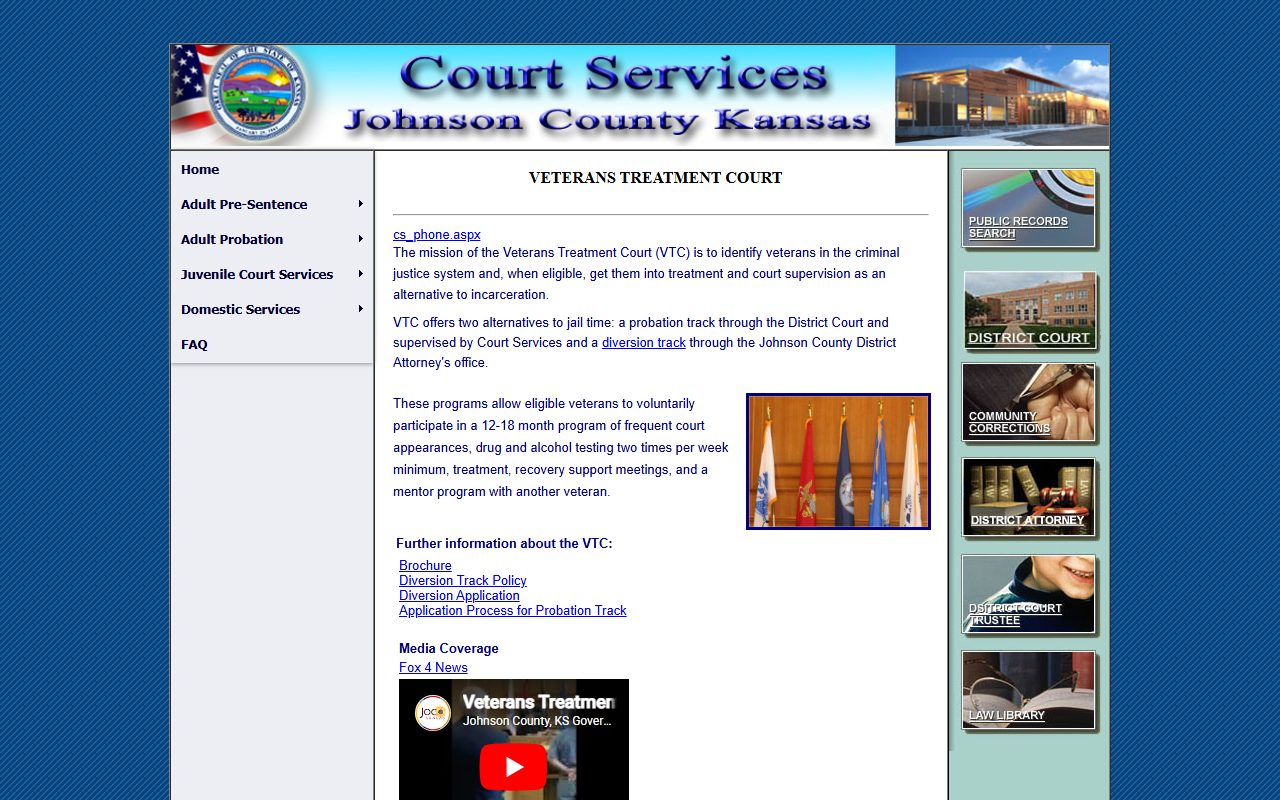
The Kansas Judicial Branch lists the 10th Judicial District among the state's veterans treatment courts.
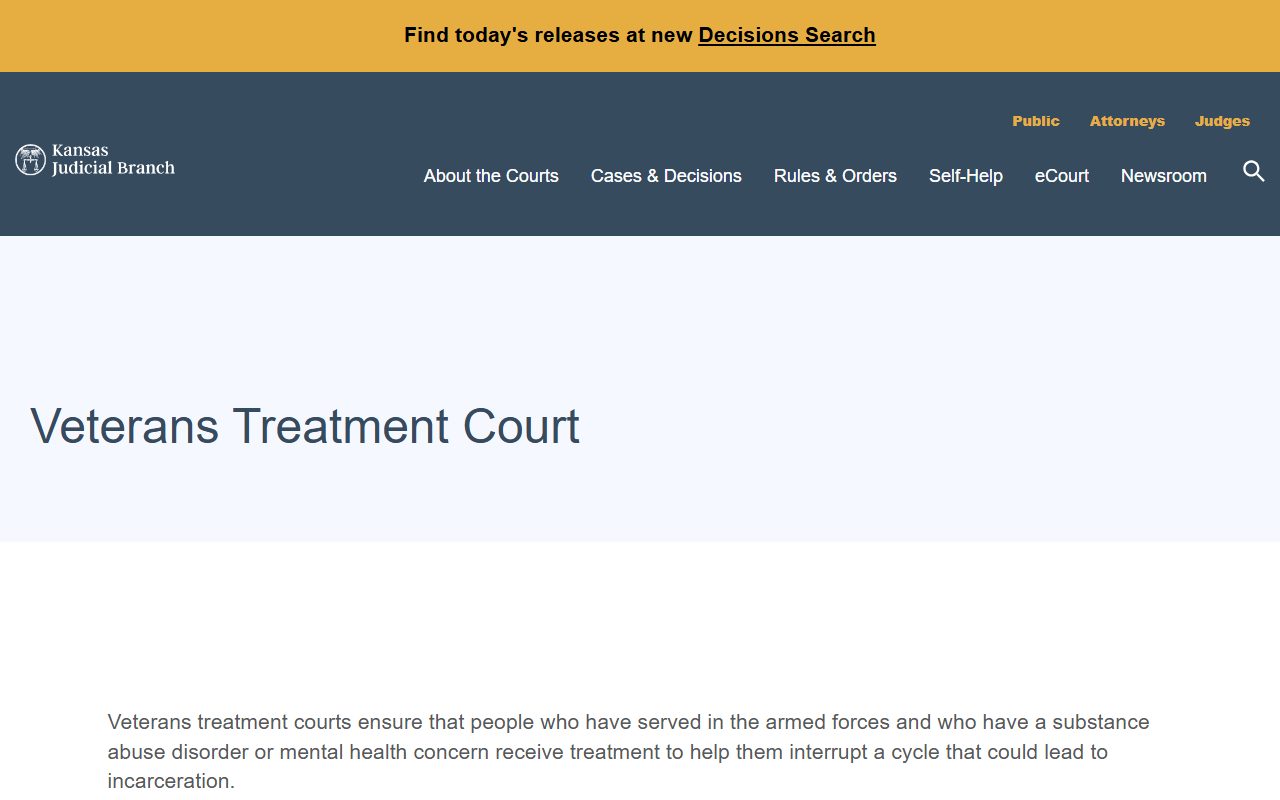
The Kansas Veterans Treatment Court page confirms the statewide program.
District Attorney and Juvenile Cases
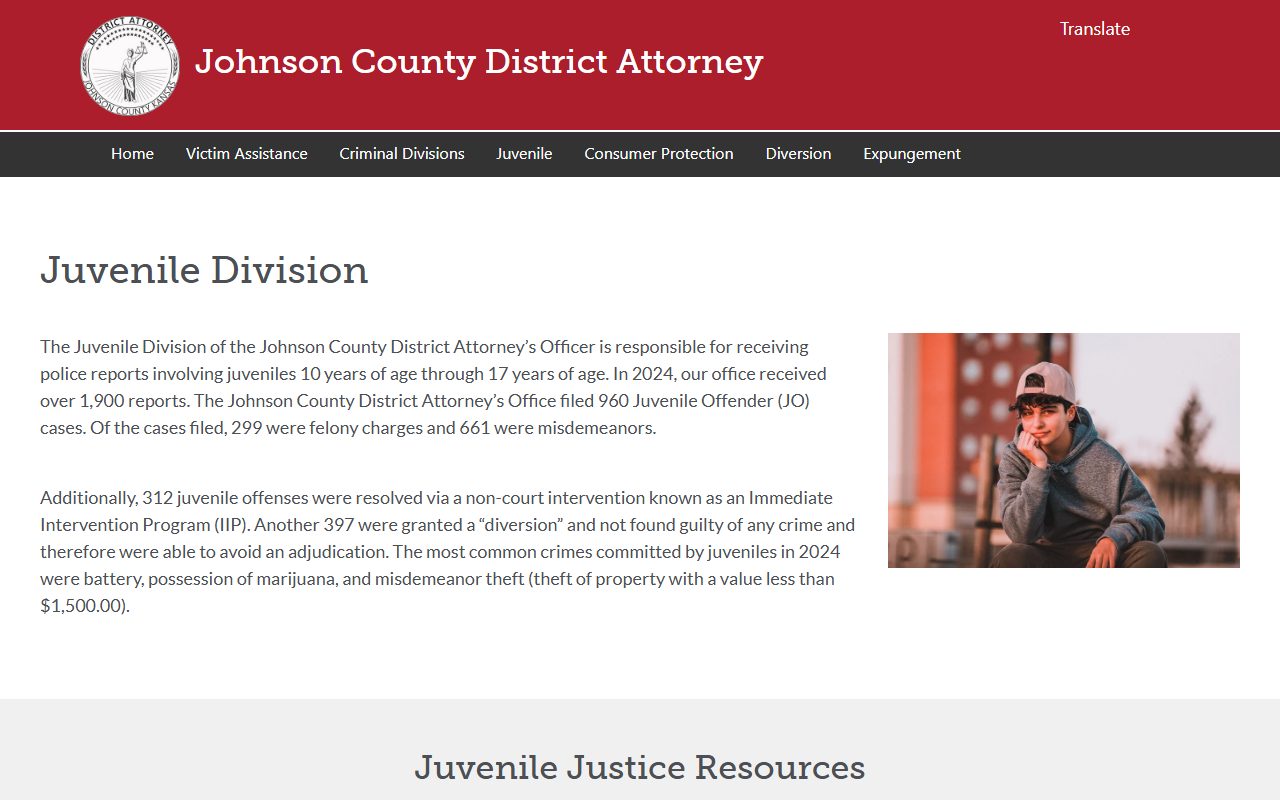
The District Attorney's Office prosecutes cases in the District Court and runs the Juvenile Division for youth ages 10 through 17. In 2024 the office received over 1,900 juvenile reports and filed 960 juvenile offender cases. Many resolved through diversion or an Immediate Intervention program rather than a finding of guilt.
The DA Juvenile Division page details the 2024 caseload and the diversion options.
For how juvenile records are treated, see the arrest records page.
Appeals Path
Appeals from the District Court go to the Kansas Court of Appeals, with the Kansas Supreme Court above it for discretionary review and certain direct appeals. Federal cases for county residents go through the U.S. District Court for the District of Kansas instead, and federal appeals run to the Tenth Circuit. For federal options, see the public records page. Most cases, though, begin and end at the District Court level without ever reaching an appeal.